Parkinson Disease: Everything You Need to Know About This Neurological Condition
Introduction
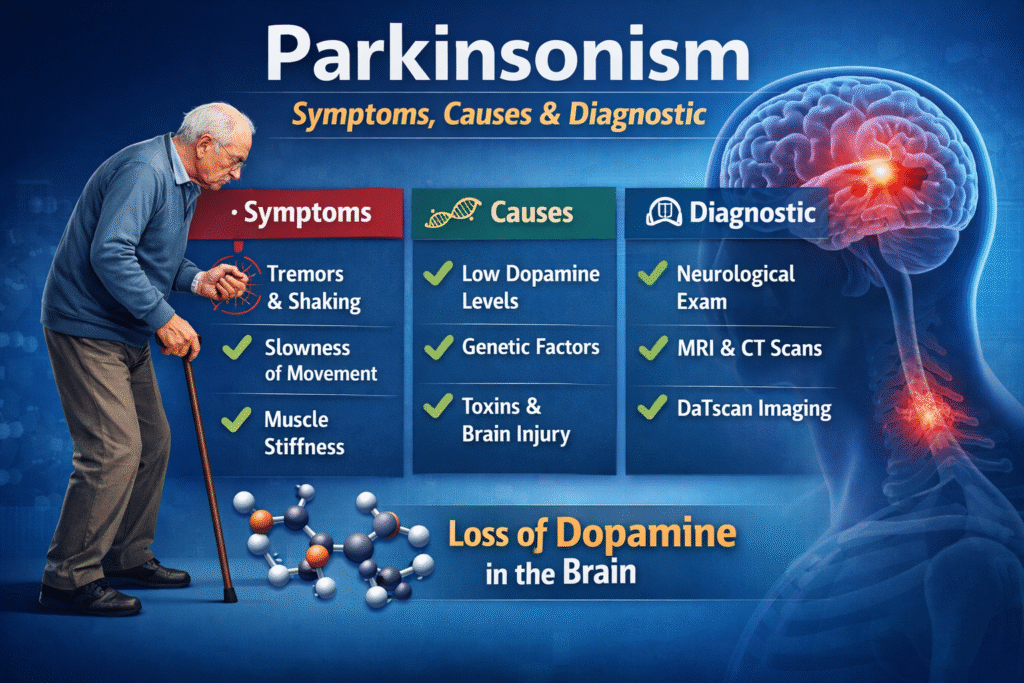
The term “Parkinson Disease” is used to describe a group of nervous system disorders that, in particular, cause movement problems similar to those seen in Parkinson’s Disease. Although many people often confuse Parkinsonism with Parkinson’s Disease, they are not exactly the same. In fact, it is encompasses a variety of conditions that share common symptoms, such as tremors, rigidity, and slowness of movement.
Understanding this disorder is essential, because not only does early recognition help, but it also allows proper management, thereby significantly improving quality of life.
What Is Parkinsonism?
Parkinsonism refers to a collection of symptoms rather than a single disease. These symptoms occur due to problems in the brain areas responsible for movement control, particularly those involving dopamine—a chemical that helps coordinate smooth and controlled muscle activity.
Common Symptoms of Parkinson Disease
Although symptoms may vary depending on the underlying cause, most people experience:
- Tremor (shaking, especially at rest)
- Bradykinesia (slowness of movement)
- Muscle rigidity (stiffness)
- Postural instability (balance problems)
- Difficulty walking or performing daily tasks
Additionally, non-motor symptoms may include:
- Depression and anxiety
- Sleep disturbances
- Memory and cognitive issues
Causes of Parkinsonism
It can develop due to various reasons; in fact, some of the most common causes include:
1. Parkinson’s Disease
The most common cause is a condition in which, over time, brain cells that produce dopamine gradually degenerate.
2. Drug-Induced Parkinsonism
Certain medications, especially antipsychotic drugs, can block dopamine and trigger symptoms.
3. Vascular Parkinsonism
It is caused by small strokes, which, in turn, affect the areas of the brain responsible for movement.
4. Atypical Parkinsonian Disorders
These include rare but serious conditions such as:
- Progressive supranuclear palsy (PSP)
- Multiple system atrophy (MSA)
- Corticobasal degeneration (CBD)
How Is Parkinson Disease Diagnosed?
Diagnosing Parkinsonism can be challenging because symptoms often overlap with other neurological disorders. Doctors typically use:
- Detailed medical history
- Physical and neurological examinations
- Brain imaging tests like MRI or CT scans
In some cases, response to medications such as Levodopa helps confirm the diagnosis.
Treatment Options
Although it cannot always be cured, several treatments can help manage symptoms effectively.
1. Medications
- Levodopa: Increases dopamine levels
- Dopamine agonists
- Anticholinergic drugs
2. Physical Therapy
Improves mobility, flexibility, and balance.
3. Lifestyle Changes
- Regular exercise
- Healthy diet
- Stress management
4. Advanced Treatments
In severe cases, surgical options like deep brain stimulation (DBS) may be recommended.
Living with Parkinsonism
Living with Parkinsonism can be challenging; however, with the right support and care, many individuals can still lead fulfilling lives. Moreover, support groups, counseling, and active family involvement play a crucial role in enhancing emotional well-being and overall quality of life.
Key Differences: Parkinsonism vs Parkinson’s Disease
| Feature | Parkinsonism | Parkinson’s Disease |
|---|---|---|
| Type | Group of disorders | Specific disease |
| Cause | Multiple causes | Dopamine neuron loss |
| Progression | Varies | Gradual and progressive |
| Treatment response | Sometimes limited | Often responds well |
When to See a Doctor
Seek medical advice if you notice:
- Persistent tremors
- Difficulty walking
- Unexplained stiffness
- Sudden changes in movement or coordination
Early diagnosis can make a significant difference in treatment outcomes.
Conclusion
In short, Parkinsonism is not a single disease, but rather a group of various conditions that affect movement and physical coordination. While it shares some similarities with Parkinson’s disease, its underlying causes and progression can differ significantly. Therefore, to manage symptoms and improve quality of life, early diagnosis, appropriate treatment, and necessary lifestyle modifications are of paramount importance.
- Parkinson Disease
- Clascoterone: A Game-Changer for Hair Regrowth
- IBS (Irritable Bowel Syndrome)
- GERD: Gastroesophageal Reflux Disease
- Hair Loss: Everything You Need to Know About Hair Loss?
Clascoterone: A Game-Changer for Hair Regrowth