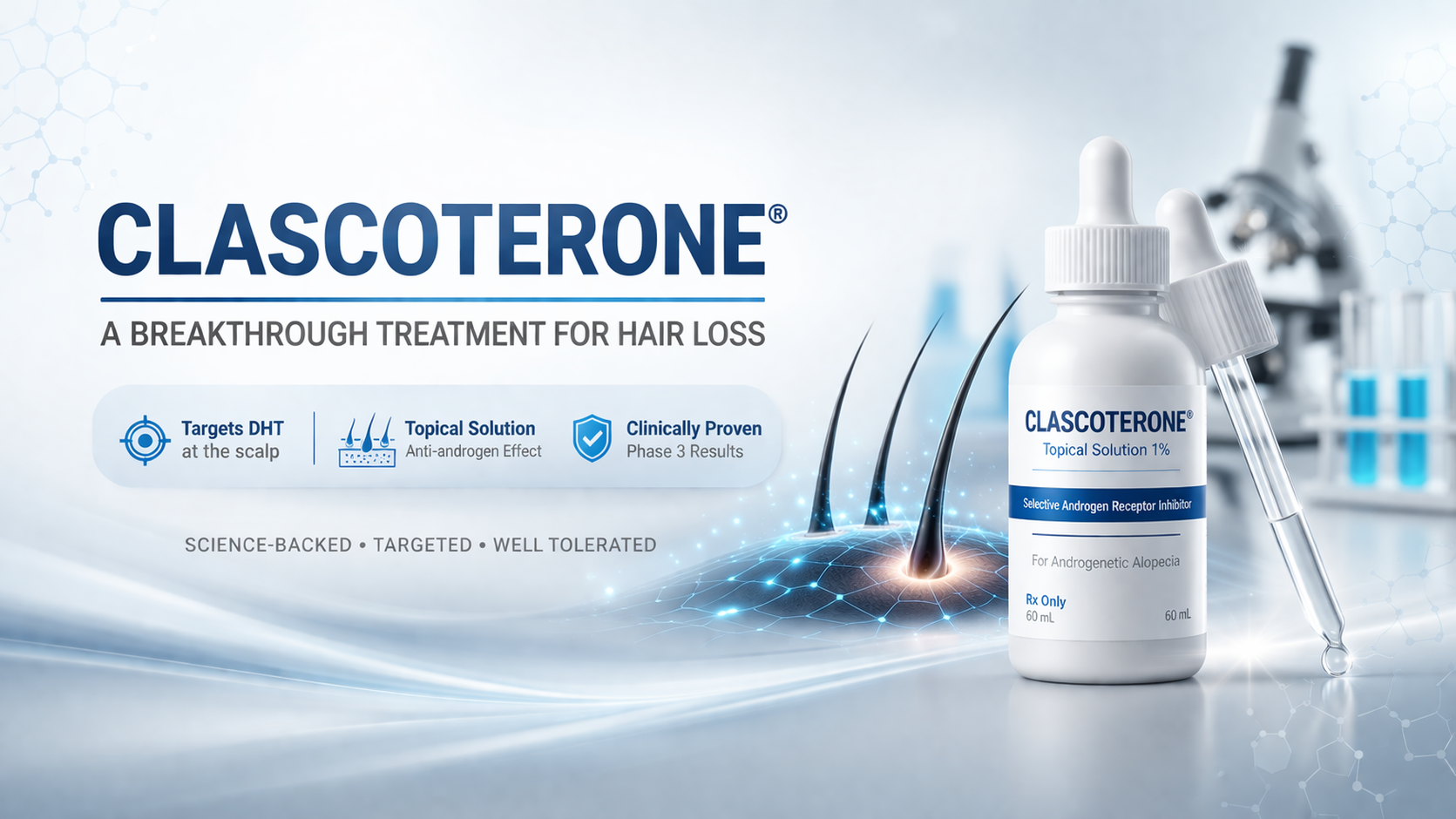
You Need to Know About Clascoterone:
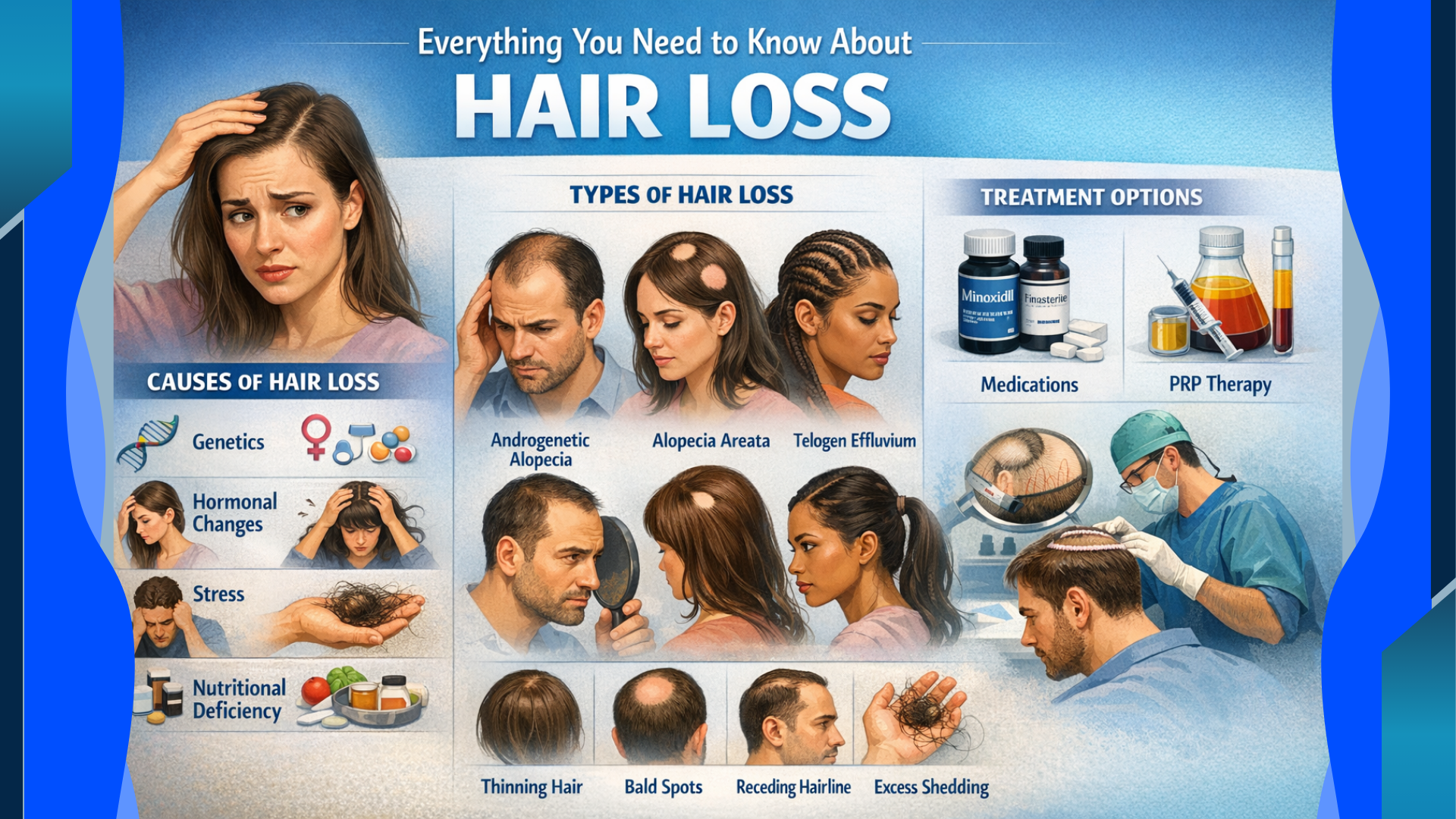
Hair loss is one of the most common concerns affecting millions of people worldwide. Whether it is thinning hair, receding hairlines, or complete baldness, the emotional and psychological impact can be significant. Over the years, only a few treatments—like minoxidil and finasteride—have dominated the market. However, a new and promising solution called Clascoterone is gaining attention as a potential game-changer in hair restoration.
In this article, we will explore what clascoterone is, how it works, its latest clinical updates, benefits, limitations, and what the future holds.
What Is Clascoterone?
Clascoterone is a topical anti-androgen medication that works by blocking androgen hormones—especially dihydrotestosterone (DHT)—at the skin level. Initially, it was approved in 2020 as a cream for treating acne. However, researchers soon discovered its potential in treating androgenetic alopecia (pattern hair loss).
Unlike traditional oral medications, Clascoterone is applied directly to the scalp, making it a topical treatment with minimal systemic absorption. This characteristic makes it particularly appealing to individuals concerned about the side effects associated with oral medications.
Understanding Hair Loss and DHT
To understand how clascoterone works, it is essential to first understand the role of DHT in hair loss.
DHT is a hormone derived from testosterone that binds to androgen receptors located within the hair follicles. Over time, this binding causes the hair follicles to shrink, leading to thinning hair and, ultimately, a complete cessation of hair growth.
Currently available treatments address this problem in different ways:
- Minoxidil improves blood flow to hair follicles
- Finasteride reduces DHT levels throughout the body
However, both treatments have limitations, including inconsistent results and potential side effects.
How Clascoterone Works
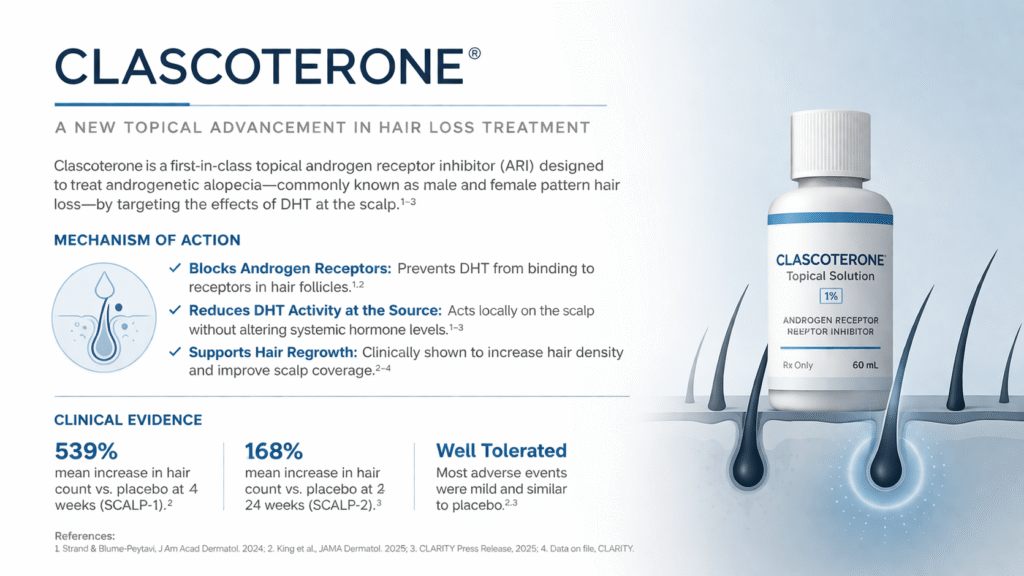
Clascoterone introduces a completely new mechanism. Instead of reducing DHT levels in the entire body, it works by blocking DHT directly at the hair follicle receptors.
This localized action offers several advantages:
- Targets the root cause of hair loss
- Minimizes hormonal side effects
- Reduces systemic exposure
In simple terms, clascoterone acts like a protective shield for hair follicles, preventing DHT from damaging them while allowing normal hormone levels in the body.
Latest Clinical Trial Results (2025–2026)
The excitement around clascoterone mainly comes from its recent Phase 3 clinical trial results, which have shown highly promising outcomes.
Two large studies—SCALP-1 and SCALP-2—were conducted on more than 1,400 men suffering from androgenetic alopecia.
Key Findings:
- Up to 539% improvement in hair count compared to placebo
- Another study showed 168% improvement
- Statistically significant hair regrowth in both trials
- Positive patient-reported satisfaction
These results suggest that clascoterone is not only effective but also clinically meaningful in improving hair density and appearance.
Moreover, researchers noted that the drug demonstrated consistent performance across different populations and study settings, which adds to its credibility.
Safety and Side Effects
One of the biggest advantages of clascoterone is its excellent safety profile.
Clinical trials reported:
- Side effects similar to placebo
- Minimal skin irritation
- No significant systemic hormonal effects
Because the drug acts locally on the scalp, it avoids many of the concerns associated with oral medications like finasteride, such as sexual side effects or hormonal imbalances.
This makes clascoterone a promising option for individuals who are hesitant to use systemic treatments.
Comparison with Existing Treatments
To better understand the value of clascoterone, let’s compare it with current hair loss treatments:
1. Minoxidil
- Improves blood circulation
- Works for many users but not all
- Requires continuous use
2. Finasteride
- Reduces DHT throughout the body
- Highly effective
- May cause systemic side effects
3. Clascoterone
- Blocks DHT locally at the scalp
- Promising effectiveness
- Minimal systemic risks
Clearly, clascoterone combines the benefits of targeted treatment with a safer side-effect profile, making it a strong candidate for future therapy.
Advantages of Clascoterone
Clascoterone offers several key benefits:
✔ Localized Action
It works directly at the site of hair loss, improving precision and effectiveness.
✔ Reduced Side Effects
Since it does not significantly enter the bloodstream, the risk of systemic side effects is low.
✔ New Mechanism
It is considered the first new approach to hair loss treatment in over 30 years.
✔ Suitable for Long-Term Use
Its safety profile suggests it could be used for extended periods.
Limitations and Challenges
Despite its promise, clascoterone is not without limitations.
❌ Not Yet Approved for Hair Loss
As of now, it is still under regulatory review and not widely available.
❌ Long-Term Data Pending
While short-term results are impressive, long-term effectiveness is still being studied.
❌ Availability Timeline
Experts expect approval submissions in 2026, with possible market availability around 2027.
❌ Cost Considerations
As a new treatment, it may initially be expensive.
Who Can Benefit from Clascoterone?
Clascoterone may be particularly useful for:
- Individuals with early-stage hair loss
- People who cannot tolerate finasteride
- Those looking for a non-systemic treatment
- Patients seeking combination therapy with minoxidil
Additionally, it may benefit individuals who want to maintain existing hair rather than regrow completely lost hair.
Future of Clascoterone
The future of clascoterone looks highly promising. Researchers believe it could:
- Become a first-line treatment for androgenetic alopecia
- Be combined with other therapies for better results
- Expand into treatments for women and other conditions
Furthermore, its success may pave the way for new topical anti-androgen therapies, opening a new era in hair loss treatment.
Final Thoughts
Clascoterone represents one of the most exciting advancements in hair loss treatment in decades. With its unique mechanism of action, strong clinical results, and favorable safety profile, it has the potential to redefine how androgenetic alopecia is treated.
Although it is not yet available in the market, ongoing research and upcoming regulatory approvals could soon make it accessible to millions of people struggling with hair loss.
In conclusion, if current trends continue, clascoterone may soon stand alongside—or even surpass—existing treatments as a safer and more targeted solution for hair restoration.