Hair Loss: Everything You Need to Know About Hair Loss?
Hair loss is a common concern affecting millions of men and women worldwide. While losing a few strands daily is normal, excessive or sudden hair fall can be distressing and may signal an underlying issue. Understanding the causes, types, and treatment options for hair loss can help you take timely and effective action.
What Is Hair Loss?
Hair loss, medically known as alopecia, occurs when hair falls out faster than it grows back. It can affect the scalp or the entire body and may be temporary or permanent. Hair loss can develop gradually over time or appear suddenly, depending on the cause.
Common Causes Hair Loss
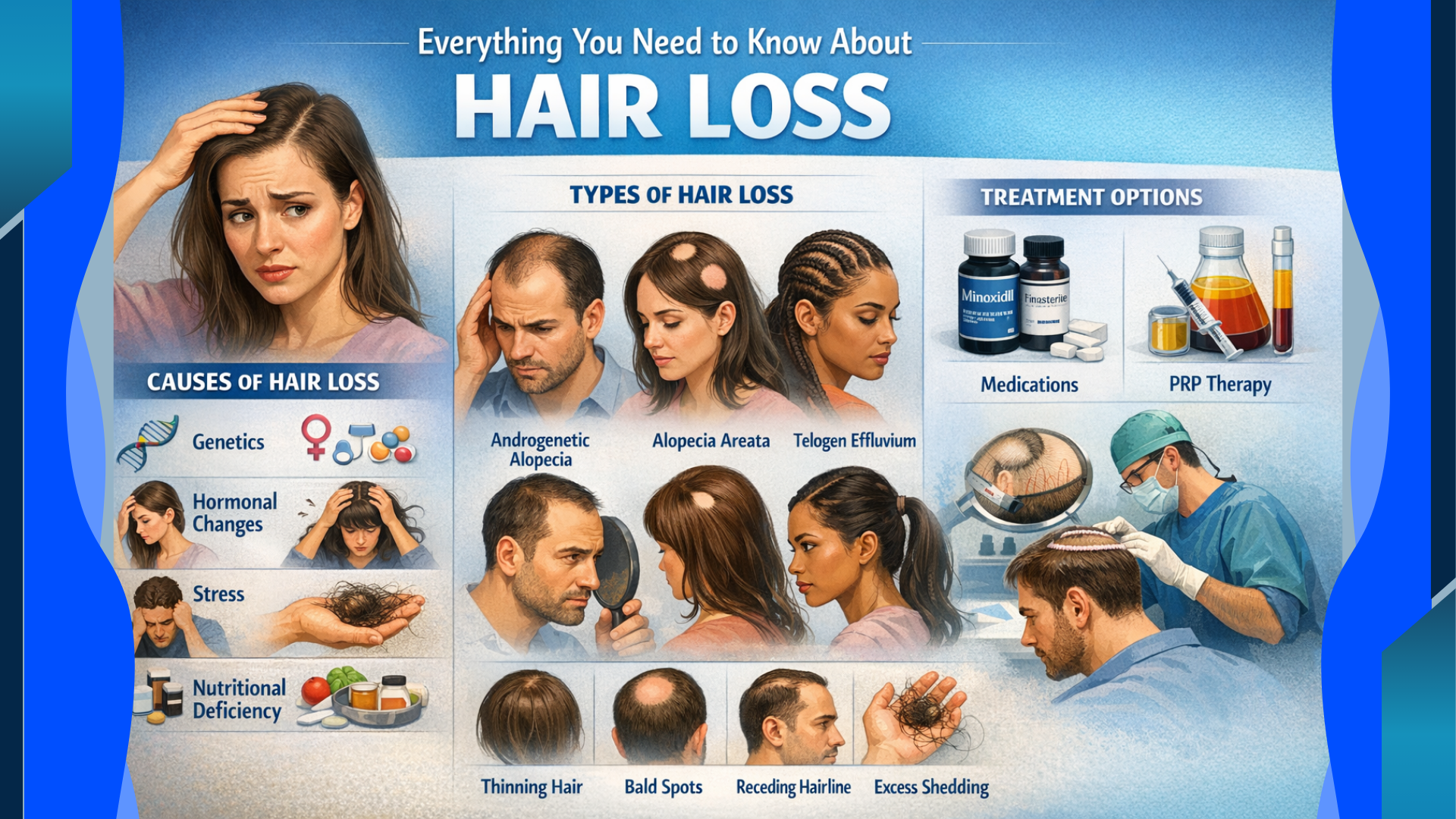
Several factors can contribute to hair loss, including:
1. Genetics
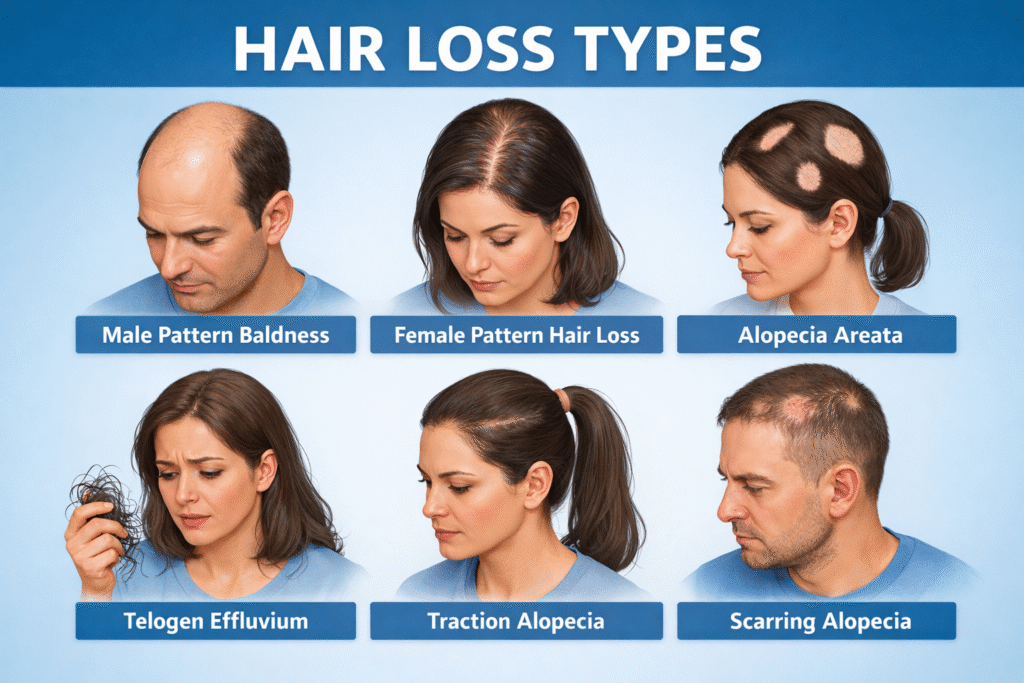
Hereditary hair loss, also called androgenetic alopecia, is the most common cause. It usually appears as a receding hairline or thinning crown in men and overall thinning in women.
2. Hormonal Changes
Pregnancy, childbirth, menopause, thyroid disorders, and conditions like PCOS can disrupt hormone levels and trigger hair fall.
3. Nutritional Deficiencies
Lack of essential nutrients such as iron, protein, zinc, biotin, and vitamin D can weaken hair follicles and slow hair growth.
4. Stress and Lifestyle Factors
Physical or emotional stress, poor sleep, smoking, crash dieting, and excessive styling or heat treatments can all lead to increased hair fall.
5. Medical Conditions and Medications
Autoimmune diseases, scalp infections, chemotherapy, antidepressants, and blood pressure medications may cause temporary or permanent hair loss.
Types of Hair Loss
Understanding the type of hair loss is key to choosing the right treatment:
- Androgenetic Alopecia: Genetic pattern hair loss
- Telogen Effluvium: Temporary shedding caused by stress or illness
- Alopecia Areata: Autoimmune condition leading to patchy hair loss
- Traction Alopecia: Hair loss due to tight hairstyles
- Scarring Alopecia: Permanent hair loss caused by follicle damage
Signs and Symptoms
It may present in different ways, such as:
- Excessive hair shedding
- Gradual thinning on the scalp
- Bald patches or circular spots
- Widening part line
- Receding hairline
How it’s Diagnosed?
Doctors may diagnose hair loss through:
- Medical history and physical examination
- Blood tests to check nutrient or hormone levels
- Scalp examination or biopsy
- Hair pull test
Treatment Options Available
Treatment depends on the cause and severity of hair loss:
Medical Treatments
- Minoxidil: Helps stimulate hair growth
- Finasteride: Reduces hormone-related hair loss in men
- Corticosteroids: Used for autoimmune-related hair loss
Natural and Lifestyle Approaches
- Balanced diet rich in protein, iron, and vitamins
- Stress management through yoga or meditation
- Gentle hair care and avoiding harsh chemicals
- Scalp massage to improve blood circulation
Advanced Treatments
- Platelet-Rich Plasma (PRP) therapy
- Hair transplant surgery
- Low-level laser therapy
Can Hair Loss Be Prevented?
While not all types of hair loss are preventable, you can reduce risk by:
- Eating a nutrient-rich diet
- Managing stress effectively
- Avoiding tight hairstyles and excessive heat
- Treating medical conditions early
When to See a Doctor
Consult a healthcare professional if you experience sudden, severe, or unexplained hair loss, or if hair fall is accompanied by itching, pain, or other symptoms.